
What it’s like to study a Master of Professional Accounting at Charles Sturt University in Port Macquarie
Moving from India to Australia to study accounting is a big step, but for Gagan, choosing Charles Sturt University in Port Macquarie turned out to be the right decision both academically and personally. Studying a Master of Professional Accounting, he has found a balance between high-quality education, career-focused learning, and a relaxed coastal lifestyle.
From academic support to life by the beach, Gagan shares what it’s really like to study in a regional Australian city.
 The views that you can enjoy living in Port Macquarie.
Why Study Masters of Professional Accounting at Charles Sturt University, Port Macquarie
Choosing the right university often comes down to opportunities, support, and quality of education. For Gagan, Charles Sturt University stood out for all three—especially in a regional setting.
“When I was going through all the stuff. I found that, especially in the regional areas, Charles Sturt has a really good opportunity to study. That's the main reason I chose it, and the quality of the education is really good here. The type of support you will find in the librarian or your course convener, subject coordinator, they will help you out in all the scenarios.”
This level of academic and personal support is something many students actively search for when considering postgraduate study abroad.
What Is It Like Studying Accounting in Australia for International Students
Studying accounting in Australia is not just about theory—it’s about practical, real-world learning that prepares students for their careers.
“The main thing is that the type of studies you are doing back in your country is different from here. They are totally different sorts of assessments. You are working. It's not just writing some stuff on your paper boards; it's different.”
“A lot of work that gives a really good exposure to the real career opportunities.”
This hands-on approach gives students industry-relevant skills, making them more prepared for professional roles after graduation.

How Supportive Is Charles Sturt University for International Students
Support services can make a significant difference when studying abroad, and Gagan highlights how accessible and helpful they are at Charles Sturt.
“We have the international student support officer. They are always there to help us. We can book an appointment, and sometimes, even if you want, you can just walk in and ask for help, and they will help you out.”
Having approachable staff and flexible support options ensures that students always have somewhere to turn when they need guidance.
What Is It Like Living in Port Macquarie as an International Student
Port Macquarie offers a very different experience compared to major cities, with a quieter, more relaxed lifestyle that allows students to focus and enjoy their surroundings.
“Everything is really good here, from the studies I'm doing and from the personal life I'm living here. It's not overcrowded, so it's really good to live here.”
“You can make friends here easily. People are humble and friendly as well. From a study perspective, it's really less crowded, so you can focus on your studies really well.”
This balance between academic focus and quality of life is one of the biggest advantages of studying in regional Australia.
 Town beach in Port Macquarie
Student Life in Port Macquarie Beaches and Lifestyle
One of the highlights of living in Port Macquarie is the coastal lifestyle, which plays a big role in student wellbeing.
“The first thing is a bit of work, but not much. I don't have any work on Monday, so I love to spend all my day on the beach from the morning till the coffee, on the town beach or at the lighthouse beach.”
Having access to beaches and outdoor spaces allows students to unwind and maintain a healthy lifestyle alongside their studies.
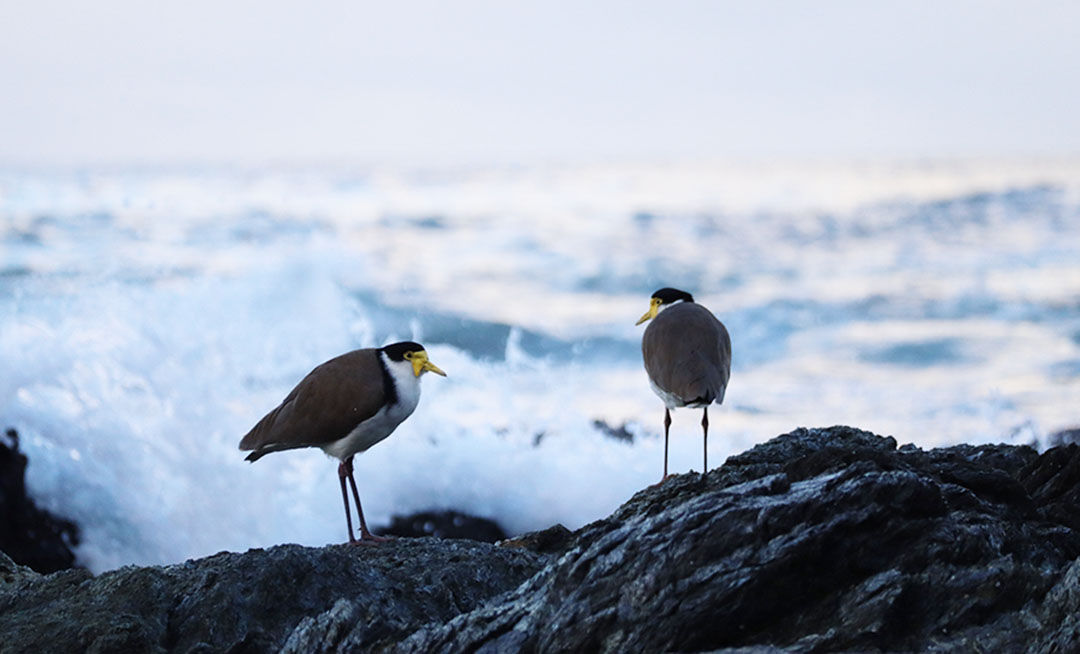 Birds enjoying the sea in Port Macquarie.
Unique Experiences Living in Regional Australia, Port Macquarie
Living in a regional area brings unique experiences that many international students may not expect.
“You can enjoy the beaches, you can join the wildlife in the morning when you wake up, you can have the kangaroos going around in your gardens, and a lot of other things as well.”
“And there's a lot of other local communities you can enjoy there as well for the community work.”
These everyday experiences make studying in Port Macquarie feel both relaxed and enriching.
Culture Shock and Adjusting to Life in Australia for Indian Students
Adapting to a new country always comes with challenges, and for Gagan, language and communication were part of that adjustment.
“The first thing, the slang, the way the people talk here, although we are also used to English in India, the slang they use here is totally different, and it's quite interesting exploring other accents or exploring the new slang here.”
Rather than seeing it as a barrier, he embraced it as part of the learning experience.
TEQSA Provider Identification: PRV12018 (Australian University). CRICOS Provider:
00005F
Master of Professional Accounting CRICOS: 107935H
Related Posts

From India to Australia’s Coast: Geetika’s Journey
Leaving her hometown in northern India, Geetika set out on a journey that would take her far beyond anything she had experienced before. Cho...

Studying BA (Hons) Design for Film at IADT Ireland: Jana's Experience
Moving from Mexico to Ireland was a big step for Jana, but she quickly discovered that the BA (Hons) Design for Film programme at the Instit...

Why I Chose to Study Model Making & Design For Film at IADT
For Rosemarie from Idaho, USA, studying abroad wasn't originally part of the plan. But after visiting Ireland and discovering a place where...

Designing Change: Folayemi's Journey Through IADT's MA in Design for Change
For Folayemi, studying the MA Design for Change at Dun Laoghaire Institute of Art Design and Technology (IADT) was about more than advancing...