
Why Study in Ireland? A Complete Guide for International Students (2026)
Ireland has a habit of sneaking onto shortlists it wasn't invited to. Someone sets out to study in the UK or the US, starts reading properly, and keeps landing back on this small island on the edge of Europe. It's English-speaking, it's in the EU, the degrees are well regarded, and there's a genuine route to staying and working after you graduate. On paper it ticks a lot of boxes at once.
This is the honest version of the case for it. Not the tourism board one with the green fields and the pints, though those are real enough. The practical one: what it actually costs, whether the universities hold up, what the work rules are, and the parts nobody puts in the brochure, like the state of finding somewhere to live in Dublin.
Why Ireland ends up on so many shortlists
The single biggest reason is one most people only half-clock: after Brexit, Ireland is the only English-speaking country left in the European Union apart from Malta. If you want an English-language degree and everything that comes with EU membership, your options narrowed sharply, and Ireland became one of the very few places that does both.
That matters more than it sounds. It means you study in English, but you're inside the EU, close to the rest of Europe, and plugged into a European economy rather than an isolated one. For students who want the reach of Europe without having to learn a new language to get a degree, that combination is genuinely hard to find anywhere else.
Then there's the jobs picture, which is unusual for a country this size. Ireland is where a huge number of American tech and pharmaceutical companies base their European headquarters. Google, Meta, Apple, Microsoft, Pfizer, and a long list of others have major operations there, mostly clustered around Dublin. For students in tech, business, pharma, or finance, that's not an abstract perk. It's a concentration of the exact employers you might want to work for, sitting a bus ride from campus.
The universities: small country, well-known degrees
Ireland's higher education system is small but respected, and the names travel further than the country's size would suggest.
Trinity College Dublin is the oldest and best known internationally, usually the country's highest ranked, and it sits right in the centre of Dublin rather than on an out-of-town campus. University College Dublin (UCD) is the largest, with a big international community and a broad range of subjects, and you can get a feel for it on its WiSH institution page. Beyond the two Dublin heavyweights, University College Cork, the University of Galway, and the University of Limerick all have strong reputations and very different characters depending on the city they sit in.
The system is broader than just the traditional universities, though, and that's worth knowing if the biggest names feel out of reach or off-budget. The technological universities and institutes have grown into a serious part of the picture, often with a more applied, industry-connected style of teaching. TUS (the Technological University of the Shannon) and Atlantic Technological University (ATU) both host a lot of international students and tend to sit at a lower price point than the older universities. Maynooth University, just outside Dublin, has a real campus feel and a friendly reputation. You can read honest, first-hand accounts of what studying at some of these places is actually like on WiSH, including ATU, TUS, and Maynooth.

The honest bit about cost
Cost is where you need to separate two very different situations, because Ireland treats them completely differently.
If you hold an EU or EEA passport, you're generally treated as an EU student, and undergraduate fees are heavily subsidised through the state's free fees scheme, so you mostly pay a much smaller annual student contribution rather than full tuition. If you're a non-EU international student, you pay full international fees, and those are a different order of number. As a rough guide, non-EU undergraduate tuition tends to land somewhere in the region of EUR 10,000 to EUR 25,000 a year for most subjects, climbing well beyond that for medicine and some clinical courses. Postgraduate fees vary widely by course. Those bands move every year and differ by university, so treat them as a starting point and check the exact figure for your course rather than budgeting off a number you read online. Our Ireland tuition fees guide goes into the breakdown in more detail.
Now the part the official pages tend to skate over: accommodation. Ireland, and Dublin in particular, has a well-documented housing shortage, and student accommodation is genuinely hard to find and expensive when you do. This is not a minor footnote. It's probably the single biggest practical challenge of studying in Ireland, and the students who struggle most are usually the ones who left it late or assumed it would sort itself out. Start looking early, apply for university-managed accommodation the moment you're able to, and go in with a realistic budget rather than the optimistic one. Outside Dublin the pressure eases, which is one of several reasons the other cities are worth serious thought.
The better news is that scholarships for international students do exist, both from the Irish government and from individual universities, and they're worth chasing rather than assuming you won't qualify. It's also worth reading up on how to fund the whole thing before you rule Ireland in or out on cost alone, which we cover in our guide on financing your studies abroad.
Working while you study, and the part that really matters: staying after
Two separate things, and the second is one of Ireland's strongest cards.
While you study, non-EU students on the right kind of study visa can usually work part time during term and full time during official holiday periods. The exact hours are capped and the rules have been adjusted in recent years, so confirm the current limit before you count on a particular income. It helps with living costs, but it won't cover full international tuition on its own, so don't build your budget around it.
The bigger draw is the Third Level Graduate Programme, Ireland's post-study work route. In broad terms it lets eligible non-EU graduates stay on to look for and take up work after finishing, with the length depending on your qualification level. Graduates of honours bachelor's degrees get a shorter window, and master's and PhD graduates get a longer one. The precise durations and eligibility conditions are set by immigration policy and can change, so check the current rules directly rather than relying on a figure from a blog, but the principle is the thing: Ireland gives international graduates a real, structured pathway to gain work experience in the country, in an economy stuffed with the kind of multinational employers who hire graduates. That's a large part of why students weighing Ireland against bigger-name destinations often come down on Ireland's side.
Which city: Dublin, Cork, Galway, Limerick
You're choosing a place to live for a few years, not just a name on a certificate, and Ireland's cities have distinct personalities.
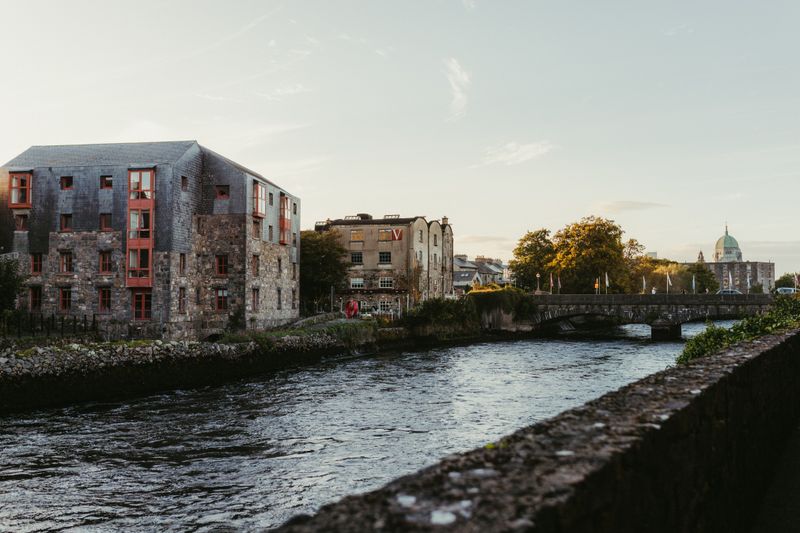
Dublin is the capital, the biggest, the most cosmopolitan, and where most of the multinational jobs are. It's also the most expensive and the hardest place to find somewhere to live, so you're trading convenience and opportunity against cost and housing stress. Cork, in the south, is the second city and proud of being its own thing rather than a smaller Dublin, with a good food and music scene and a size you can actually get your head around. Galway, out west, is the one students rave about most. It's small and artsy, sits right on the Atlantic, and has a walkable, sociable feel that comes up again and again when people talk about where they were happiest. Limerick has a strong university-town character, with the University of Limerick campus as a real hub, and it tends to be cheaper than Dublin.
If your priority is graduate job access and you can stomach the cost and the housing hunt, Dublin makes sense. If you'd rather have an easier, cheaper, more sociable student life and you're relaxed about being outside the capital, Cork, Galway, and Limerick are all strong choices that a lot of international students end up happier in.
What day-to-day life is actually like
The honest picture is warm, with a couple of real caveats.
The friendliness is not a cliche. Irish people have a genuine reputation for being welcoming and easy to talk to, and international students tend to back that up. The social culture is built around conversation, and "the craic" (roughly, good fun and good company) is a real organising principle rather than a tourist slogan. For someone arriving alone and nervous about making friends, that openness makes a real difference, and it's part of why students settle in faster than they expect.
The weather is the caveat everyone warns you about, and they're right to. Ireland is mild but grey and wet for large stretches of the year, and the winters are dark rather than freezing. It rarely gets extreme, but it can wear on you if you've come from somewhere sunny, and it's worth being honest with yourself about how much that matters to you. The other caveat is cost of living, which is high, especially in Dublin, and stacks on top of the accommodation problem already mentioned.
None of that changes the core, though. Ireland is small enough to feel manageable, close enough to the rest of Europe for easy travel, and social enough that most people find their feet quickly. The transition still takes effort, the way it does anywhere far from home, and we pulled together what students told us about the harder early stretch in our piece on overcoming challenges as an international student, which is worth reading before you go rather than after.
So, is Ireland right for you?
Ireland rewards a particular kind of student. If you want an English-language degree inside the EU, a respected qualification, a real post-study work pathway, and an economy packed with multinational graduate employers, it's one of the best-value serious options out there, and the friendliness makes the landing softer than most.
Where it's a harder sell: if your budget is tight and you're set on Dublin, the combination of full international fees and the housing crunch is a genuine strain, and you should either look hard at the cheaper cities or go in with your accommodation sorted very early. If you need reliable sunshine or a huge megacity, Ireland won't give you either.
The sensible move is to weigh it honestly against the alternatives rather than romanticise it. Our guide to choosing the right country to study abroad is a good framework for that, and our roundup of the best countries for international students shows where Ireland sits against the field. If you're also weighing up the UK next door, our rundown of the benefits of studying in the UK makes a useful side-by-side, since the two get compared constantly.
Frequently asked questions
Why should I study in Ireland as an international student?
Ireland is one of the only English-speaking countries in the EU, its degrees are well regarded internationally, and it has a real post-study work route through the Third Level Graduate Programme. On top of that, a large share of major US tech and pharmaceutical companies base their European operations there, so graduate job opportunities are unusually concentrated for a country its size. The main trade-offs are cost and the difficulty of finding accommodation, especially in Dublin.
How much does it cost to study in Ireland?
It depends heavily on whether you're an EU or non-EU student. EU students usually benefit from the free fees scheme and pay a smaller student contribution, while non-EU international students pay full tuition, which for undergraduate courses tends to sit roughly in the EUR 10,000 to EUR 25,000 a year range and runs higher for medicine and some clinical subjects. Fees change yearly and vary by university, so confirm the exact figure for your course, and budget carefully for accommodation, which is expensive and in short supply.
Can I work in Ireland after I graduate?
Ireland offers a post-study work option through the Third Level Graduate Programme, which lets eligible non-EU graduates stay to seek and take up employment, with the length depending on your qualification level (shorter for honours bachelor's graduates, longer for master's and PhD graduates). The exact durations and conditions are set by immigration policy and can change, so check the current rules directly before building plans around a specific entitlement.
Can international students work while studying in Ireland?
Non-EU students on an eligible study visa can generally work part time during term and full time during official holiday periods, subject to a cap on hours that has been adjusted in recent years. It helps cover living costs but won't pay full international tuition on its own, so confirm the current limit and don't rely on it as your main source of funding.
Which is the best city in Ireland for international students?
There isn't a single answer, because it depends on what you want. Dublin has the most graduate job opportunities and the most cosmopolitan feel, but it's the most expensive and the hardest for accommodation. Cork, Galway, and Limerick are cheaper, smaller, and often more sociable, with Galway in particular a favourite among students for its lively, walkable character. Match the city to your priorities on cost, jobs, and lifestyle rather than defaulting to the capital.
Rankings and fee tables only tell you so much. The part that's genuinely hard to find is what it actually feels like to move to Ireland and study there. That's the whole reason WiSH exists. You can read honest, first-hand stories from students at Irish institutions, including UCD, ATU, and Mary Immaculate College, and hear it in their own words rather than from a prospectus.
And if you've already studied in Ireland, your story is exactly what the next person deciding at 1am needs to read. It takes a few minutes to share, and it's the kind of thing you'd have wanted before you went.
Related Posts

Studying in New Zealand: Why It's an Underrated Choice for International Students
New Zealand almost never makes the shortlist. Most people weighing up studying abroad go straight to the UK, the US, Canada, or Australia, a...

Studying in Australia: What It's Actually Like for International Students
Australia shows up on almost every "best places to study abroad" list, usually next to a photo of a beach and a sandstone university buildin...

Top 10 Reasons to Study in China as an International Student
China is now firmly established as a global study destination, attracting international students who are looking for strong academics, good...

Best Countries for International Students in 2026
Studying abroad in 2026 is about more than chasing a name on a ranking list. Students today are looking for a complete experience that combi...