
Why Study in Montreal?
You've decided on Canada. The field is more or less settled, everyone's rooting for you, and there's one thing left to pin down: which city? It's an easy question to skip past, but the city shapes your daily life far more than the country does, and Montreal makes a strong case for itself. It's regularly rated one of the best student cities on the planet, it's cheaper than Toronto or Vancouver, and it's genuinely unlike anywhere else in North America. Here's the honest version of why, and the couple of things worth knowing before you commit.

One of the world's best student cities
Montreal shows up near the top of the QS Best Student Cities ranking year after year, usually inside the global top twenty. That ranking isn't just about university reputation. It weighs things students actually care about: affordability, the range and quality of institutions, how easy it is to find work, how international the city feels, and how safe it is. Montreal scores well across the board, which is why it holds its place rather than spiking once and fading. Exact positions and scores shift each year, so check the current ranking, but the consistency is the point.
It's often called the cultural capital of Canada, and for international students it's long been an appealing alternative to the US market: North American in feel, but with a European atmosphere, a lower price tag, and a distinct identity of its own.
The universities
For a single city, Montreal's line-up of universities is genuinely strong, and it's split across two languages.
On the English side, McGill University is the headline name, one of the top universities in the world, research-heavy, and internationally recognised, with a huge range of graduate and undergraduate programmes. Concordia University, also English-speaking, is known for a more applied, creative approach, with strong reputations in fields like film, fine arts, business, and communications. On the French side, the Universite de Montreal is one of Canada's leading research universities, and the Universite du Quebec a Montreal (UQAM) is well regarded particularly in the arts, social sciences, and design. Between them you've got serious academic range in whichever language you're studying in.
Do you need to speak French?
This is the question everyone asks, and the honest answer is: not to study, but it helps to live there.
Montreal is officially French-speaking, in the province of Quebec, but it's one of the most bilingual cities in the world, and you can complete an entire degree in English at McGill or Concordia. Plenty of international students do exactly that. Day to day, though, French is the language of the city around you, in shops, on signs, in a lot of social settings, and while you can get by in English in much of central Montreal, you'll get far more out of the place if you pick up some French while you're there. Think of it as a bonus rather than a barrier: you can arrive with none and study perfectly well, and you'll likely leave with a useful second language.
Cost of living and tuition
Affordability is a big part of Montreal's pitch. It's consistently one of the more affordable major cities in Canada to live in, noticeably cheaper than Toronto or Vancouver, especially on rent, which is where a lot of a student budget goes.
Tuition is more complicated, because Quebec sets its own fee structures and they differ from the rest of Canada, and international student tuition and the province's rules around it have been changing. Treat any figure you read as a starting point and check the current fees for your specific university and programme directly. The same goes for the overall cost of studying in Canada, which our guide on how much it costs to study in Canada breaks down in more detail. Montreal being the cheaper option among Canada's big student cities is the durable point.
Culture, winters, and getting around
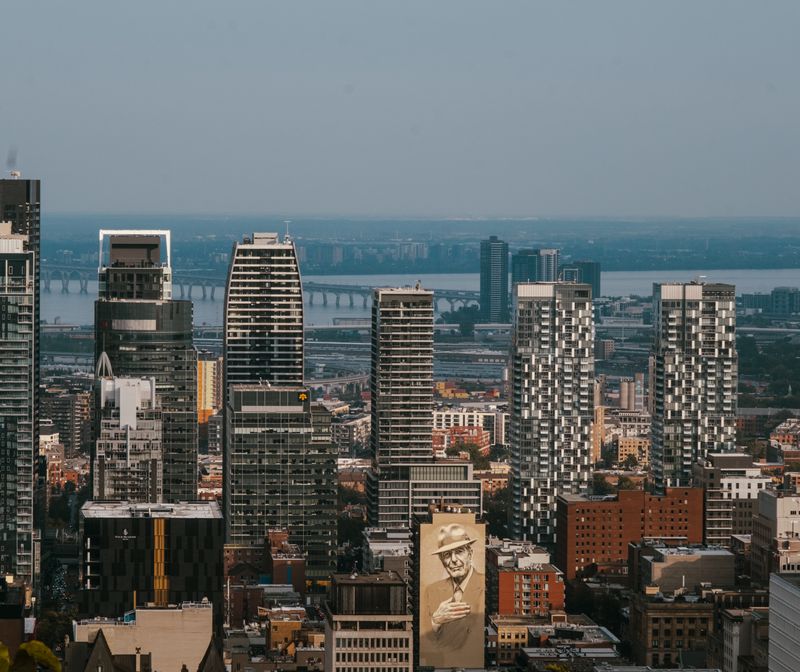
Montreal earns its cultural-capital reputation. It runs on festivals, from jazz to comedy to film, has a food scene that punches well above the city's size, and mixes French, North American, and immigrant influences into something you won't find anywhere else on the continent. For a student, it's a city where there's always something on and you rarely need much money to enjoy it.
Two honest caveats. First, the winters are long and genuinely cold, colder than a lot of people are prepared for, so factor that into both your wardrobe and your expectations. The upside is that the city is built for it, with an extensive underground network connecting metro stations, malls, and buildings so you can move around without going outside. Second, on getting around, the metro and bus system is cheap, reliable, and student-friendly, and Montreal has good, affordable flight connections to other Canadian and US cities, which makes travel during breaks easy.
If you're still weighing Montreal against other Canadian cities, our roundup of the best cities in Canada for international students is a useful comparison, and if you're torn between Canada and the US more broadly, our Canada vs USA guide lays out the trade-offs.
Working and staying after you graduate
A big part of Canada's appeal has always been the ability to work during and after your studies, but this is exactly the area where the rules have shifted most in the last couple of years. Eligibility for working while you study, and for the post-graduation work permit that lets graduates stay and gain Canadian work experience, has been tightened and adjusted, and Quebec has its own immigration considerations on top.
Because these rules genuinely matter to your plans and they're moving, don't rely on older guidance. Confirm the current work and post-study rules with official Canadian and Quebec sources and your university's international student office before making decisions based on a specific entitlement. The principle, that Canada offers routes to work during and after study, still holds, but the details are what you need to check.
Frequently asked questions
Is Montreal a good city for international students?
Yes. Montreal consistently ranks among the best student cities in the world, with strong universities in both English and French, a rich cultural scene, and a lower cost of living than Toronto or Vancouver. Its main downside is the long, cold winter, though the city is well set up to handle it.
Do you need to speak French to study in Montreal?
No. You can complete a full degree in English at McGill or Concordia, and many international students do. Montreal is officially French-speaking, so French is helpful for daily life and getting the most out of the city, but it isn't required to study there.
What are the main universities in Montreal?
The best-known English-language universities are McGill, one of the top universities in the world, and Concordia, known for creative and applied fields. On the French side, the Universite de Montreal and the Universite du Quebec a Montreal (UQAM) are both well regarded, giving the city serious academic range in either language.
Is Montreal cheaper than other Canadian cities?
Generally yes. Montreal is consistently one of the more affordable major Canadian cities, particularly for rent, which makes it noticeably cheaper to live in than Toronto or Vancouver. Tuition depends on Quebec's own fee rules and your programme, so check current figures for your university.
Can you work while studying in Montreal?
Canada has routes to work during and after study, including a post-graduation work permit, but the rules have changed significantly in recent years and Quebec has its own considerations. Confirm the current eligibility and conditions with official sources and your university's international office rather than relying on older information.
Rankings and reputation only tell you so much. What's harder to find is what it actually feels like to live and study in Montreal. That's why WiSH exists. If you've studied there, sharing your story takes a few minutes and gives the next person the honest version they're looking for.
Related Posts

Top 10 Universities in Australia for International Students
Australia continues to attract students from around the world thanks to its high academic standards, multicultural communities, and strong g...

Best Cities in Canada for International Students
Choosing the right city is just as important as choosing the right university. For international students, Canada offers a wide variety of d...

Why Australia Stands Out as a Study Destination
Australia turns up on nearly every "best places to study abroad" list, usually next to a photo of a beach. The lifestyle is real, but it's n...

Top 6 things to do in London
Parks are a great way to visit London, as there are loads of parks dotted around the city. They are all unique and worth visiting - especial...